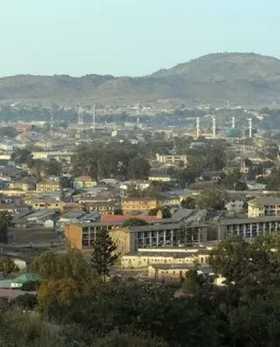
For one person, living costs in Ogbomosho are estimated at $485 a month, including rent and utilities – 36% below the national average. Rent and utilities take less than a third of the total.
Real prices from locals and on-the-ground checks – rent, groceries, transit and the daily extras. Here's what a month in Ogbomosho actually costs, broken down by who's living it.
Living costs for one person come to about $485 monthly including rent, or $371 excluding housing.
$485 /mo
Estimated monthly costs for a couple: $814 with rent, or $700 without housing.
$814 /mo
Monthly costs for a family of three come to about $1,143 including rent, or $1,029 for daily expenses alone.
$1,143 /mo
📊
Ogbomosho sits 60–64% below the global median across household types. Within Africa, costs are well below average (46% lower) – one of the most affordable options in the region.
Midsize Hatchback 1.4l(Volkswagen Golf, Toyota Prius, Honda Civic, etc)
$11.3K₦15.1M
$6,044₦8.0M
$12.1K₦16.1M
Compact Sedan 1.6l(Toyota Corolla, Mazda3, Kia K4, Hyundai Elantra, etc)
$13.9K₦18.5M
$11.5K₦15.3M
$21.4K₦28.5M
🧾 Monthly Utilities & Internet
Cost
Range
Utilities for 2 People in 2-bedroom Apartment(Heating, Electricity, Gas, Water, Garbage)(85m2)
$114₦151.7K
$30.63₦40.7K
$254₦338.1K
SIM Card Monthly Plan(Calls and 10GB+ Data)
$15.04₦20.0K
$6.89₦9,162
$49.75₦66.2K
Internet(50+ Mbps, Unlimited Data)
$33.40₦44.4K
$19.03₦25.3K
$76.1₦101.3K
🎉 Sport & Entertainment
Cost
Range
Cinema Ticket
$6.14₦8,172
$4.44₦5,910
$7.78₦10.3K
🧸 Childcare & Education
Cost
Range
Preschool or Kindergarten, Full Day, Private, 1 Child(Monthly)
$672₦893.2K
$26.55₦35.3K
$2,368₦3.1M
International Primary School, 1 Child(Yearly)
$19.7K₦26.2M
$3,371₦4.5M
$31.9K₦42.4M
👕👟 Clothing & Footwear
Cost
Range
Jeans(Levis 501 Or Similar)
$14.55₦19.3K
$8.95₦11.9K
$22.38₦29.8K
Summer Dress(H&M, Zara, etc)
$18.42₦24.5K
$7.63₦10.2K
$49.65₦66.0K
Sport Shoes(Adidas, Nike)
$36.65₦48.7K
$21.19₦28.2K
$75.4₦100.2K
Men's Leather Business Shoes
$48.31₦64.3K
$18.70₦24.9K
$150₦199.1K
💵 Salaries & Financials
Cost
Range
20-Year Fixed Mortgage Interest Rate(Annual %)
18.39
18
20
CityCost data is based on AI and user input – minor inaccuracies may occur.
Last update: October 10, 2026
Monthly budget structure
Share of the monthly basket for one person, rent included.
Share of the monthly basket for a family of three, rent included.
Ogbomosho$485
Ogbomosho$1,143
🧾Monthly Utilities & Internet
$162 33.5%
🛒Groceries & Markets
$154 31.7%
🍽Eating Out
$98 20.3%
👕👟Clothing & Footwear
$53 10.9%
🎉Sport & Entertainment
$12 * 2.5%
🚌Getting Around
$5.4 * 1.1%
Categories marked with * are only partly priced – their share counts the items that do have prices.
🧾Monthly Utilities & Internet
$177 15.5%
🛒Groceries & Markets
$368 32.2%
🍽Eating Out
$444 38.9%
👕👟Clothing & Footwear
$118 10.3%
🎉Sport & Entertainment
$25 * 2.2%
🚌Getting Around
$11 * 1%
Categories marked with * are only partly priced – their share counts the items that do have prices.
Cost Breakdown
🛒Expect to spend about $154 monthly on groceries. Dining out at a mid-range restaurant costs roughly $50.0 for two – above the African average of $41.00.
Cost Highlights
⭐Imported beer is among the 20 cheapest worldwide (out of 7,169 cities)
⭐Ogbomosho has the 7th most expensive preschool or kindergarten, full day, private, 1 child in Africa
⭐Ogbomosho has the 10th cheapest local beer in Africa
English is commonly used in services, signage, and daily life
Cost of Living in Ogbomosho - Frequently Asked Questions
How affordable is Ogbomosho for travelers, expats, and digital nomads, and how does it compare to other Nigerian cities?
Cost of Living in Ogbomosho, Nigeria tends to be approachable for travelers, expats, and digital nomads. The city offers reasonably priced street food, markets, and local services, with rents often more flexible than larger cities. Living like a local, shopping at neighborhood markets, and choosing housing a short ride from the center boosts value. For workspaces, you can find coworking options or quiet cafés with usable internet. Tip: Align your base with a neighborhood that balances safety, amenities, and transit to your favorite spots.
What does a typical day look like for housing, food, transport, and errands, and how should you search for options?
Daily life centers on simple conveniences and approachable options. Housing tends to include modest apartments in traditional compounds or modern flats in new developments; negotiate leases for longer terms to get better terms. Food is abundant at market stalls and casual eateries offering local staples at friendly prices; cooking at home is economical. Getting around is feasible by buses, shared taxis, or on foot in central areas; for longer trips, rideshares or discounted ride options can help. For errands, you will find a mix of small shops and larger supermarkets. Ogbomosho, Nigeria living cost varies by neighborhood and season, so plan for occasional fluctuations. Tip: map a short list of a few neighborhoods and visit before committing.
How do you assess neighborhood fit and budget planning for different seasons, and what are practical tips to save while living in Ogbomosho?
Quality of life in Ogbomosho tends to reward practical budgeting and community cues: you get more value if you prioritize neighborhoods with reliable water and power partnerships, proximity to markets, and access to transport. Build a budgeting framework around three pillars: housing (choose a shared or compact apartment to balance space and price), daily needs (shop at local markets, cook at home), and mobility (use public transit or walk when possible). Seasonal shifts influence market variety and crowd levels, so plan shopping trips and errands accordingly. Tip: test a neighborhood routine for a short period to see if it fits your pace and expectations.
Why is Ogbomosho considered affordable?
Compared to most cities worldwide, Ogbomosho is just cheap – all-in costs average $485 monthly. Both housing and daily necessities sit below the international median, which explains its popularity with budget travelers, nomads, and locals on modest incomes.
What is the average cost of living in Ogbomosho in 2026?
As of 2026, monthly living costs in Ogbomosho come to around $485 including rent, or roughly $371 excluding it. Numbers shift a bit by season and neighborhood, but this range works well as a planning baseline.
What is a good salary in Ogbomosho?
Earning $728 monthly in Ogbomosho means you're living well – a one-bedroom, regular groceries, transport, and some entertainment without stress. That's the threshold where most residents feel genuinely comfortable rather than just getting by.
Is food expensive in Ogbomosho?
Groceries in Ogbomosho cost around $154 monthly – well below what you'd pay in most cities. Fresh produce, staples, and locally made goods are all well-priced, so eating well on a budget is straightforward here.
How much does childcare cost in Ogbomosho?
Childcare averages $672 monthly at a private kindergarten in Ogbomosho. For many families, this single cost rivals rent, so it's essential to factor in before making a move.
Can you live on $800 a month in Ogbomosho?
$800 stretches far in Ogbomosho – all-in monthly costs average only $485. The surplus means you can build savings, travel a bit, and live above the local average without much effort.
What is quality of life like in Ogbomosho?
Ogbomosho offers genuinely appealing day-to-day living. Residents value wellness scene, great local cuisine, multilingual environment, and at around $485 per month, it's accessible to a broad range of incomes. Most people find the cost-to-quality balance sustainable long-term.
Can you save money living in Ogbomosho?
Monthly expenses in Ogbomosho run around $485, so putting money aside takes more than $728 in income. Keeping housing costs low and avoiding lifestyle creep are the keys to building a decent savings rate here.
Is Ogbomosho good for backpackers on a budget?
Budget travelers love Ogbomosho – low prices across accommodation, food, and transport make it one of the most backpacker-friendly cities around. Long-stay costs come to just $485 monthly; short-term visitors can get by on even less with hostels and local food.